Why You Wake Up at 3 A.M. — and How to Fall Back Asleep
It's always around the same time, isn't it? You fell asleep fine at 11. Then your eyes open in the dark, you check the clock — 3:07 — and something in your chest sinks, because you know exactly how this goes: an hour, maybe two, of lying there doing the math on how much sleep you have left.
Here's the first thing to know: you are not broken, and you are not alone. Middle-of-the-night waking is the single most common sleep complaint in adults — more common than trouble falling asleep. And it has a biology that, once you understand it, stops being frightening and starts being fixable.
Why 3 a.m., specifically?
Sleep isn't one continuous state. You cycle through light sleep, deep sleep and REM roughly every 90 minutes, and — this is the part nobody tells you — you briefly surface at the end of almost every cycle. Everyone does, every night, four to six times. Good sleepers just don't remember it, because they sink straight back down.
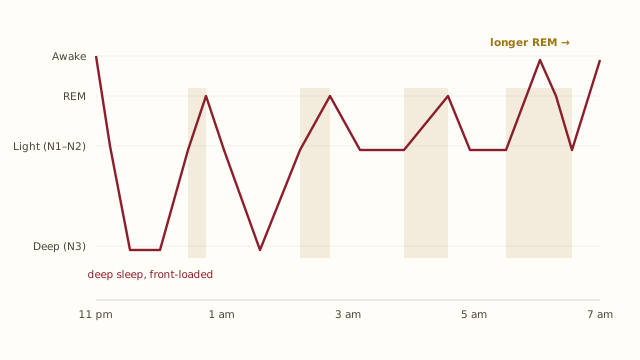
By 3 a.m. two things have changed. First, you've spent most of your deep-sleep pressure — the second half of the night runs on lighter stages that are easier to wake from. Second, your body has started its pre-dawn shift: core temperature bottoms out and cortisol, the alertness hormone, begins its natural morning rise. Add any extra load — stress, alcohol leaving your bloodstream, a snoring partner, a bladder — and that routine surfacing tips over into full wakefulness.
The wake-up isn't the problem. The staying awake is — and that part is learned, which means it can be unlearned.
The trap that keeps you awake
What turns a 30-second surfacing into a 90-minute ordeal is almost always the same sequence: you wake → you check the clock → you calculate ("if I fall asleep right now I get four hours") → the calculation produces a small jolt of anxiety → anxiety raises arousal → arousal makes sleep impossible → which proves the anxiety right. Do this for a few weeks and your brain learns the association: 3 a.m. = alarm bell. It starts waking you fully in anticipation.
What to do tonight
The 3 a.m. protocol
- Turn the clock around. No exceptions. The time is information you cannot use at 3 a.m. — every glance is a shot of arousal.
- Don't try to sleep. Trying is effort, and effort is arousal. Your only job is to rest comfortably in the dark. Sleep is a side effect.
- If you're wound up after ~15–20 minutes (estimated, not clocked), get up. Dim light, boring activity — a dull book, folding laundry. Return when genuinely drowsy. This feels counterproductive; it's the single best-evidenced move in sleep medicine, because it breaks the bed = wakefulness association.
- Give your mind a boring job. Racing thoughts fill any vacuum. Try cognitive shuffling: pick a word ("piano"), then think of random words starting with each letter. Too dull to fear, too engaging to worry through. (More on this in our racing-mind guide.)
What to fix during the day
Nighttime tactics stop the bleeding; daytime habits cure the pattern. The big four:
- Alcohol is the classic 3 a.m. culprit. It sedates you to sleep, then rebounds into shallow, fragmented sleep exactly in the second half of the night — we wrote a whole piece on the nightcap trap.
- Caffeine after mid-afternoon lightens sleep even when it doesn't block it. Half of your 4 p.m. coffee is still in your blood at 10 p.m.
- A fixed wake time — same time every day, weekends included — does more to consolidate the night than any other single change.
- Late heavy meals and late screens both push arousal into the hours where you can least afford it.
One more honest note: if your wake-ups come with gasping, choking, or a partner reporting that you stop breathing, that's not ordinary 3 a.m. waking — that's a conversation to have with a doctor about sleep apnea.
Educational content — not medical advice. Every Sleep Solutions volume includes a "When to See a Professional" chapter; if your sleep problem comes with warning signs (gasping, chest pain, severe daytime impairment), talk to a clinician.