
Can't Stop Thinking at Night? How to Shut Off a Racing Mind
The light goes off and your brain clocks in. It replays the meeting. Drafts tomorrow's email. Re-litigates something you said in 2019. Sometimes it serves up thoughts you didn't order at all — worries, fantasies, intrusive images — and then a second layer on top: why am I thinking about this? What's wrong with me? I should be asleep.
Nothing is wrong with you. A racing mind at lights-out is the most human of sleep problems: the day's first quiet moment, arriving exactly when you have no defenses against your own head.
Why the mind races at night
During the day, your brain's narrator competes with a hundred inputs. In a dark, silent room it finally has the floor — and an aroused, alert brain will fill the vacuum with whatever has emotional charge: unfinished business, rehearsals, regrets, desires. This is also why unwanted thoughts (including sexual ones) show up at bedtime: they aren't a message or a moral failing, they're simply high-charge content in a zero-distraction environment. Research on thought suppression is unanimous — trying not to think about something is the best way to think about it more (the famous "white bear" effect). Suppression is effort; effort is arousal; arousal is the enemy.
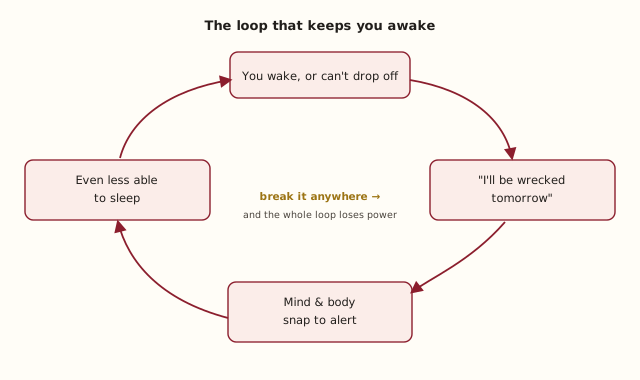
You cannot argue a racing mind into silence. But you can defuse it, distract it, and — best of all — schedule it.
The three moves that work
1. Worry on a schedule
The counter-intuitive champion, with decades of clinical evidence behind it ("constructive worry"). Sometime in the early evening — not in bed — take 15 minutes, write down every open loop in your head, and next to each one, the very next step. You're not solving your life; you're telling your brain this is filed, there's a plan, you can stand down. When the thought resurfaces at midnight, you have a truthful answer: "handled — it's on the list." The thought loses its job.
2. Give the mind a toy
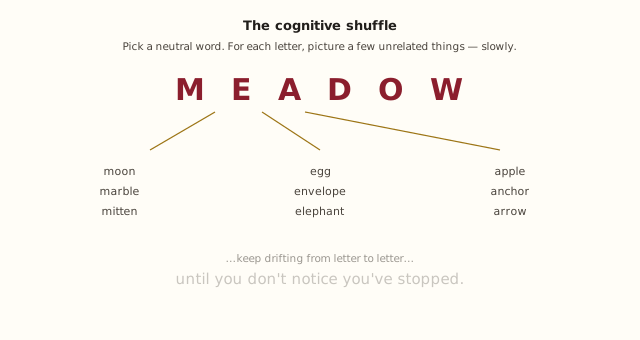
An awake brain needs something to chew. The trick is handing it content too boring to fear and too engaging to abandon. The best-known version is cognitive shuffling: pick a neutral word — say, BEDTIME — and for each letter, generate random unrelated words (B: banana, bridge, bells… E: elbow, engine…), picturing each briefly. It occupies the verbal engine that powers rumination, mimicking the scattered "micro-dreams" of natural sleep onset.
3. Defuse instead of debating
From acceptance-based therapy: instead of engaging a thought's content ("what if I get fired?"), label its presence: "there's the job worry again." Watch it like weather. This works on any thought — anxieties, regrets, and yes, the intrusive or sexual ones that make people ashamed at 1 a.m. A thought labeled is a thought half-dissolved; a thought fought is a thought fed.
Tonight's plan, one page
- Evening: 15 minutes of scheduled worry, on paper, with next steps.
- Wind-down: screens off 30–60 min before bed — feeds the narrator less.
- In bed: shuffle a word. If a worry lands: label it, return to the shuffle.
- Still wired after ~20 min: get up, dim light, boring activity, return drowsy. (Full logic in the 3 a.m. guide.)
None of these silence the mind — that's not on the menu, for anyone. What they do is lower the volume and remove the fight. And it's the fight, not the thoughts, that keeps you awake.
Educational content — not medical advice. Every Sleep Solutions volume includes a "When to See a Professional" chapter; if your sleep problem comes with warning signs (gasping, chest pain, severe daytime impairment), talk to a clinician.