Your Partner Snores and You Can't Sleep: What Actually Works
There's a specific kind of loneliness in lying awake at 2 a.m. next to someone sleeping loudly and blissfully through the noise they're making. You love them. You've also started doing math on the guest room, the couch, noise-cancelling headphones, the concept of marriage itself.
Take a breath. Snoring is one of the most solvable problems in the couples-sleep repertoire — but only if you attack it from both sides: their airway, and your ears.
First, rule out the snore that matters
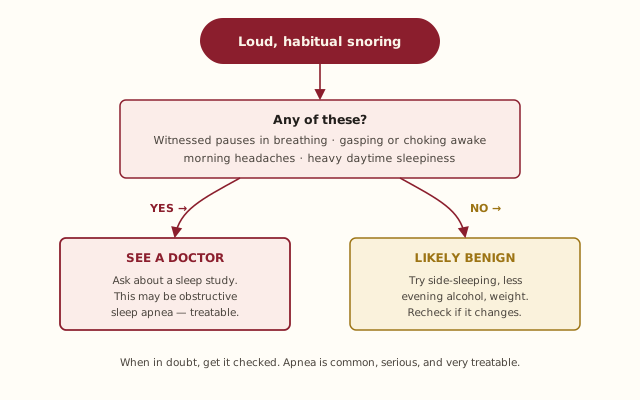
Most snoring is harmless turbulence — relaxed throat tissue vibrating as air passes. But some snoring is obstructive sleep apnea (OSA): the airway doesn't just narrow, it closes, dozens or hundreds of times a night. Untreated apnea raises the risk of hypertension, heart disease and stroke — and the snorer is usually the last to know. The bed partner is the diagnostic instrument.
Red flags — book a doctor, not a gadget
- Pauses in breathing, choking or gasping sounds you can hear.
- Severe daytime sleepiness — falling asleep at meetings, at the wheel.
- Morning headaches, dry mouth, waking unrefreshed every day.
- High blood pressure that resists treatment.
If any of those sound familiar, the entire strategy changes: home sleep tests are cheap and easy now, and treated apnea (CPAP, oral appliances) routinely gives both partners their nights back. Record 30 seconds of the snoring on your phone — it's the most persuasive argument you'll ever make.
Fixing the ordinary snore (their side of the bed)
- Position: most snoring is worse on the back. The tennis-ball trick has a modern version — positional trainers and wedge pillows — but even a body pillow encouraging side-sleeping cuts volume dramatically.
- Alcohol timing: evening drinks relax the exact throat muscles that snore. No alcohol within 3–4 hours of bed is often a bigger fix than any device. (Alcohol ruins the snorer's own sleep too — the nightcap myth, explained.)
- Congestion: a blocked nose forces mouth-breathing, which snores. Saline rinses, allergy treatment, nasal strips — cheap and surprisingly effective for the nasal-snorer.
- Weight: unglamorous but real — even modest weight loss reduces airway collapse in many snorers.
- Mouth taping, copper rings, "anti-snore" apps: we grade evidence honestly, and the evidence here rounds to zero. Save the money.
Protecting your own night (your side of the bed)
You can't out-sleep a chainsaw by trying harder. You can raise your sound floor until the chainsaw stops being an event.
- Mask, don't block. Total silence makes each snore a spike against a quiet background. A white-noise machine or fan raises the baseline so snores stop registering as alarms. This is the single best-value fix for the listener.
- Earplugs that fit. Foam plugs muffle 25–33 dB — usually enough for moderate snoring once combined with masking. Silicone or custom-molded if foam irritates.
- Go to sleep first. Snoring builds through the night; falling asleep before the orchestra tunes up means you sleep through more of it. A 20-minute head start changes everything.
- Don't lie there rehearsing resentment. Awake and furious at 2 a.m. is a racing-mind problem stacked on a noise problem — defuse it, or relocate for the rest of the night without ceremony.
And if you've genuinely fixed what's fixable and the decibels remain? Separate rooms isn't defeat — done right, it's maintenance. Here's how couples sleep apart without drifting apart.
Educational content — not medical advice. Every Sleep Solutions volume includes a "When to See a Professional" chapter; if your sleep problem comes with warning signs (gasping, chest pain, severe daytime impairment), talk to a clinician.